
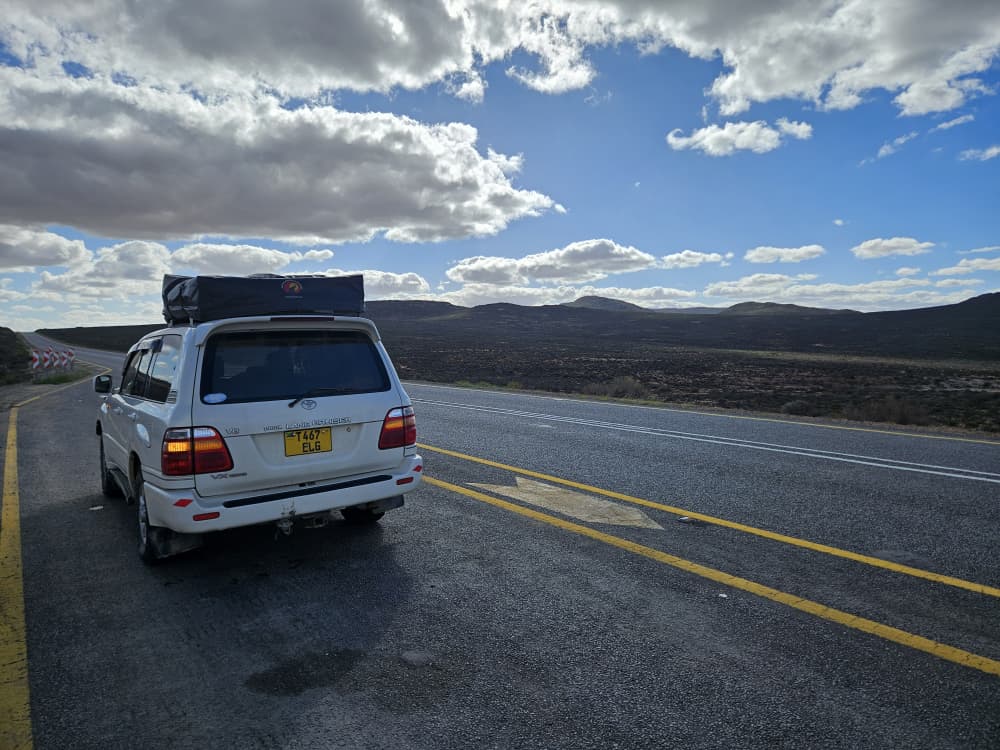
Northern Tanzania Self-Drive Safari: Serengeti, Lobo and Kogatende
A classic northern Tanzania self-drive safari can combine the landscapes of the Great Rift Valley with the wildlife-rich plains of the Serengeti and several nights in the remote northern sector around Lobo and Kogatende. The route below is designed for travellers starting and finishing in Arusha, using public campsites where possible and spending several days exploring the Mara River area in search of the Great Migration.
The itinerary intentionally does not include a Ngorongoro Crater game drive. Instead, it uses the Ngorongoro Conservation Area as a transit route when travelling between the northern circuit and the Serengeti.
Suggested Self-Drive Route
Day 1: Arusha to Mto wa Mbu
Begin your northern Tanzania self-drive safari in Arusha and drive west toward Mto wa Mbu, a lively town located beneath the Great Rift Valley escarpment.
Mto wa Mbu is a convenient overnight stop before entering the Ngorongoro Conservation Area and continuing toward the Serengeti. Travellers can stock up on food, drinking water and other supplies before heading into the national parks, where shopping opportunities become limited.
Overnight: Mwi Village House or another lodge in the Mto wa Mbu area.
Day 2: Mto wa Mbu to Central Serengeti
Leave Mto wa Mbu early and drive toward the Serengeti via the Ngorongoro Conservation Area.
This is one of the longer driving days of the itinerary. The route climbs from the Rift Valley toward the Ngorongoro highlands before descending onto the vast plains of the Serengeti.
Although this itinerary does not include a game drive inside the Ngorongoro Crater, travellers will still need to arrange and pay the applicable Ngorongoro Conservation Area entry or transit charges for the route used.
Once inside the Serengeti, continue toward the Seronera area in Central Serengeti. The journey itself offers excellent wildlife viewing, so it is wise to allow plenty of time rather than treating the drive purely as a transfer.
Overnight: Dik Dik Public Campsite or another public campsite in the Seronera area.
Day 3: Central Serengeti to Lobo
After an early breakfast, continue north through the Serengeti toward Lobo.
The landscape gradually changes as you leave the open plains of Seronera behind. The Lobo area is characterised by rocky kopjes, rolling terrain and a quieter atmosphere than the busy central Serengeti.
This is an excellent transition point between Central and Northern Serengeti and helps break up the long drive to Kogatende.
Game viewing can be excellent along the way, with opportunities to see lions, elephants, giraffes, hyenas and a wide variety of plains game.
Overnight: Lobo Public Campsite.
Day 4: Lobo to Kogatende and the Mara River
Continue north toward Kogatende, one of the most famous wildlife areas in Northern Serengeti.
The Kogatende region lies close to the Mara River and is particularly well known during the migration season. Depending on rainfall, grazing conditions and the movement of the herds, enormous numbers of wildebeest and zebra may be present in the wider northern Serengeti.
The exact location of the migration changes constantly, so visitors should not expect a river crossing at a guaranteed location or time. Spending several days in the region provides much better flexibility than simply passing through on a single game drive.
Overnight: Africa Safari Serengeti Kogatende or another lodge or camp in the area.
Days 5 and 6: Full Days Exploring Kogatende and the Mara River
Spend two full days exploring the Kogatende and Mara River area.
This flexible part of the itinerary allows self-drive travellers to follow wildlife movements rather than being restricted by a long transfer to another destination. Depending on conditions, you may explore different Mara River crossing points, the open plains around Kogatende and the surrounding northern Serengeti.
The Great Migration is a natural event, and animal movements depend heavily on rainfall and grazing conditions. A river crossing can happen suddenly, or visitors may spend hours watching large herds gather without crossing.
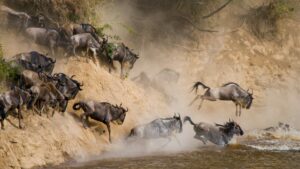
Even when there are no dramatic crossings, Northern Serengeti remains an exceptional safari destination. Resident wildlife includes lions, leopards, elephants, giraffes, buffalo, hyenas and many species of antelope.
Overnight: Lodge accommodation followed by a public campsite in the Kogatende area.
Day 7: Kogatende to Central Serengeti
Leave Northern Serengeti and begin the journey south toward Seronera.
Allow a full day for this drive. Wildlife viewing opportunities continue throughout the route, and there is no need to rush. The drive from Kogatende back to Central Serengeti can take several hours depending on road conditions, wildlife sightings and the chosen route.
Arriving in the Seronera area the previous evening makes the final drive back to Arusha more manageable.
Overnight: Public campsite in the Seronera area.
Day 8: Central Serengeti to Arusha
Leave Seronera early and travel back toward Arusha via the Ngorongoro Conservation Area.
This is another long driving day, particularly for self-drive travellers. Start early, keep sufficient fuel in the vehicle and allow extra time for road conditions and park formalities.
There is no Ngorongoro Crater descent included in this itinerary. Travellers simply transit through the conservation area as required by their route.
Arrive back in Arusha in the afternoon or evening, depending on departure time and road conditions.
Park Fees, Camping Fees and Concession Fees
The following table provides a planning guide for international non-resident visitors aged 16 and above. Tanzania park fees can change, and travellers should always confirm the applicable tariff with TANAPA, the Ngorongoro Conservation Area Authority or their safari operator before making payment.
For Serengeti, published tariffs distinguish between conservation/entry fees, public campsite fees and overnight concession or special/seasonal campsite charges. The official TANAPA tariff information should be treated as the primary reference, particularly when travelling across a tariff-year change. (Tanzania Parks)
| Fee | Approximate Rate for Non-Resident Adults | Applies To |
|---|---|---|
| Serengeti conservation/park entry | US$70 per person per 24 hours in peak season; US$60 in low season, before applicable VAT | Entry to Serengeti National Park |
| Serengeti public campsite | US$30 per person per night, before applicable VAT | Public campsites such as those in the Seronera and Lobo areas |
| Serengeti special/seasonal campsite | US$60 in the higher seasonal rate or US$50 in the lower seasonal rate, before applicable VAT | Selected special or seasonal campsites |
| Serengeti lodge/camp concession fee | Often charged separately for accommodation inside the park; rate depends on the applicable tariff and season | Lodges and camps inside Serengeti |
| Ngorongoro Conservation Area entry/transit | Separate NCAA conservation/entry charges apply. it is 70$ per person per day | Transit between Mto wa Mbu and Serengeti |
| Ngorongoro Crater service fee | Not applicable to this itinerary because there is no crater descent (it is usually 300$) | Only payable when entering the crater for a game drive |
| Vehicle fees | Vary according to vehicle registration, category and applicable authority tariff(about 20$) | Self-drive vehicle entering protected areas |
The Serengeti public camping tariff has historically been lower than the overnight fees associated with special campsites or concession-paying lodge accommodation. The published TANAPA fee structure also shows that some seasonal campsite and concession charges vary according to the period of the year. (Tanzania National Parks)
Important Note About VAT and Updated Tariffs
When budgeting, check whether the quoted figure includes or excludes VAT. Some published tariff tables show base government charges, while tour operators and payment systems may display VAT-inclusive totals. Recent 2026 planning sources, for example, list VAT-inclusive Serengeti and Ngorongoro amounts that are higher than the underlying base tariff.
For that reason, the final amount paid should always be confirmed before the trip.
Estimated Park Cost Considerations
For a camping-focused self-drive safari, your main government-related costs are likely to include:
- Serengeti park entry or conservation fees.
- Ngorongoro Conservation Area entry or transit fees.
- Serengeti public campsite fees.
- Vehicle entry fees.
- Any applicable accommodation concession fees for nights spent in lodges or permanent camps.
- VAT or other statutory charges where applicable.
Because this itinerary includes several nights inside Serengeti National Park, park and overnight fees can represent a significant part of the overall safari budget.
The advantage of using public campsites is that they can be considerably more affordable than staying in permanent luxury camps. However, campsite availability and booking procedures should be confirmed in advance.
Recommended 4×4 Vehicle for This Route
A proper 4×4 safari vehicle is strongly recommended for this itinerary.
The route covers long distances and includes a combination of paved highways, gravel roads and wildlife tracks inside Serengeti National Park. Conditions can change significantly depending on rainfall and road maintenance.
A suitable vehicle should ideally include:
- Four-wheel drive.
- Good ground clearance.
- Reliable all-terrain tyres.
- Two spare tyres.
- Jack and basic recovery equipment.
- Long-range fuel capacity or dual fuel tanks where possible.
- Compressor or tyre repair equipment.
- Fridge or cool box.
- Drinking water storage.
- GPS navigation and offline maps.
- First-aid kit.
- Camping equipment if using public campsites.
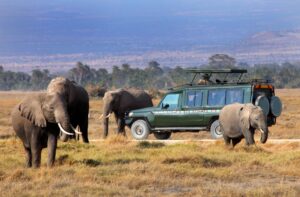
A Toyota Land Cruiser is generally the preferred choice for a route of this nature because of its durability, ground clearance and suitability for long-distance safari travel.
A standard city SUV may be capable of reaching some destinations during dry conditions, but it is less suitable for extensive game drives and remote tracks in Northern Serengeti.
Fuel Planning for a Serengeti Self-Drive Safari
Fuel planning is essential.
Travellers should fill the tank before leaving the Mto wa Mbu/Karatu area and should not assume that fuel will always be available at every location inside or near the Serengeti.
Availability can vary, and opening hours or supply can change. A vehicle with a long fuel range is particularly useful for the Kogatende section of the trip.
As a general rule:
- Start every long driving day with sufficient fuel.
- Refuel whenever a reliable opportunity is available.
- Carry additional fuel only in safe, approved containers and in accordance with park regulations.
- Avoid arriving in remote areas with the fuel gauge close to empty.
Public Camping in Serengeti
Camping is one of the best ways to experience the Serengeti on a self-drive safari.
Public campsites are generally simple and should not be confused with private safari camps or fully serviced lodges. Facilities can vary, but visitors should normally be prepared for basic conditions.
A typical self-drive camping setup may include:
- Rooftop tent or ground tent.
- Sleeping bags and pillows.
- Camping table and chairs.
- Gas cooker.
- Cooking utensils.
- Cooler or fridge.
- Food supplies.
- Drinking water.
- Torch or headlamp.
- Power bank or auxiliary battery.
Always follow campsite rules and instructions from park authorities. Do not leave food unattended, and never walk away from the designated campsite area at night without understanding the local safety rules.
Great Migration Expectations in Northern Serengeti
The Kogatende and Mara River region is one of the most famous areas for witnessing the Great Migration.
However, it is important to understand that the migration cannot be scheduled.
The wildebeest and zebra move according to rainfall, grass availability and other natural factors. In some periods, huge herds may be concentrated close to the Mara River. At other times, they may be spread across a much wider area.
River crossings are particularly unpredictable. Spending several nights in Northern Serengeti gives you a better chance of being in the right area when wildlife activity increases, but there is never a guarantee of witnessing a crossing.
For this reason, this itinerary includes multiple days around Kogatende rather than treating the Mara River as a short stop.
Road Conditions and Driving Rules
Road conditions inside Serengeti can vary considerably.
During dry weather, many routes are dusty and relatively easy to drive with a suitable 4×4. After heavy rain, sections can become muddy, slippery or damaged.
Self-drive travellers should:
- Stay on authorised roads and tracks.
- Follow speed limits.
- Never drive off-road.
- Avoid driving after dark inside national parks.
- Keep a safe distance from wildlife.
- Never attempt to approach or block animals for photographs.
- Carry enough water and fuel.
- Check road conditions before departing for remote areas.
- Inform someone of your planned route where possible.
Driving after dark is generally prohibited in Tanzania’s national parks, so daily routes should be planned to reach your campsite or lodge well before closing time.
Why This Route Works Well for Self-Drive Travellers
This itinerary offers a good balance between long-distance travel and extended wildlife viewing.
Rather than trying to cover every destination on Tanzania’s Northern Circuit, it focuses on three key areas:
Central Serengeti – excellent year-round wildlife viewing and a convenient base.
Lobo – a quieter northern section that breaks up the journey and offers varied landscapes.
Kogatende and the Mara River – the main focus for travellers hoping to follow the Great Migration in Northern Serengeti.
The route also avoids the additional cost and time required for a Ngorongoro Crater game drive. Travellers who have already visited the crater, are travelling on a tighter budget or simply want to spend more time in Serengeti may find this to be an attractive option.
Frequently Asked Questions
Do I need a 4×4 for this route?
Yes, a proper 4×4 is strongly recommended. The itinerary includes long distances on unpaved roads and extensive driving inside Serengeti National Park.
Can I drive myself to Kogatende and the Mara River?
Yes, self-drive visitors with the appropriate vehicle, permits and park payments can explore the Northern Serengeti road network, subject to current park regulations and road conditions.
Is a Ngorongoro Crater game drive included?
No. This itinerary only transits through the Ngorongoro Conservation Area where necessary. No crater descent is planned, so the crater service fee should not apply.
Do I still have to pay Ngorongoro fees if I only transit?
Yes, entering or transiting the Ngorongoro Conservation Area involves applicable NCAA fees. The exact charges and payment requirements should be confirmed for the current tariff and your chosen route.
Are public campsites cheaper than lodges?
Generally, yes. Public campsites are normally a more budget-friendly option, although visitors must bring or rent suitable camping equipment and should be prepared for more basic facilities.
Can I guarantee seeing a Mara River crossing?
No. Wildebeest river crossings are completely dependent on natural migration movements and cannot be guaranteed.
How many days should I spend in Kogatende?
At least two full days is a good starting point. More time gives you greater flexibility to follow wildlife movements and explore different areas around the Mara River.
Final Thoughts
This Arusha-to-Arusha self-drive safari is an excellent choice for travellers who want to spend most of their time in the Serengeti rather than rushing through multiple parks.
With overnight stops in Mto wa Mbu, Central Serengeti, Lobo and Kogatende, the route provides a logical progression north toward the Mara River before returning south through the Serengeti.
The combination of public camping, a proper 4×4 Land Cruiser and several flexible days in Northern Serengeti makes this itinerary particularly suitable for independent travellers looking for a genuine Tanzania self-drive adventure.
Before departure, confirm all park, camping, vehicle and Ngorongoro transit charges directly against the current official tariff. TANAPA park fees and tariffs