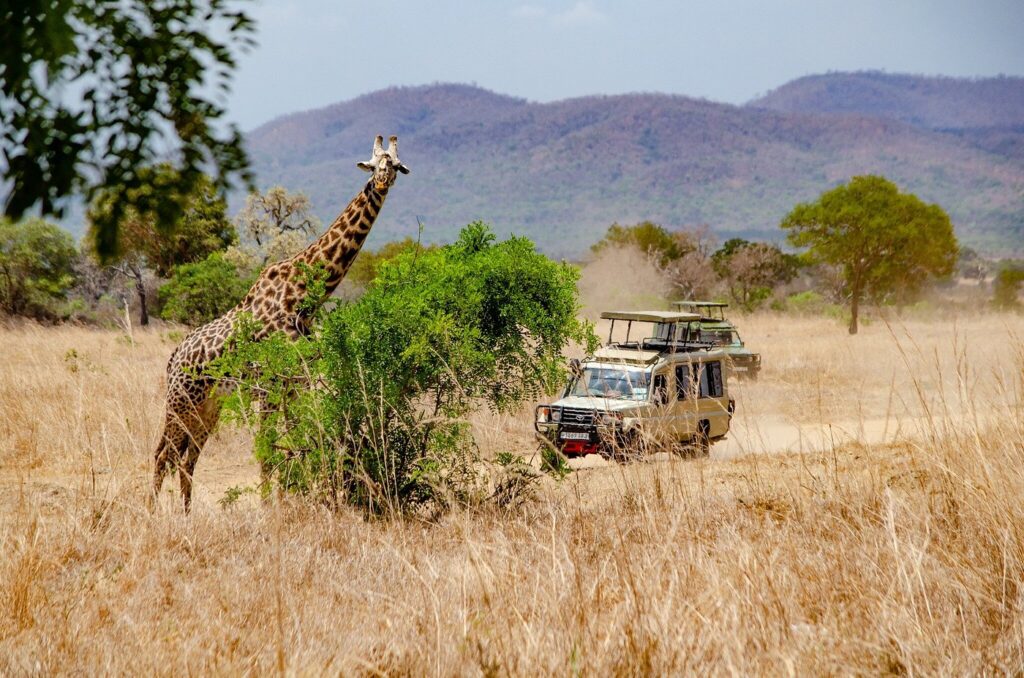
Essential Tips for an Unforgettable Self-Drive Adventure from Dar es Salaam
Dar es Salaam is more than Tanzania’s largest city and a gateway to the Indian Ocean. For adventurous travellers, it is also an excellent starting point for a self-drive adventure in Tanzania.
Starting your journey from Dar es Salaam gives you the opportunity to combine city experiences, coastal beaches, wildlife safaris, mountains and rural landscapes in one road trip. From the city, you can travel towards Mikumi National Park, Nyerere National Park, Udzungwa Mountains, Ruaha National Park and the southern highlands, or follow the coast towards Bagamoyo, Pangani and other Indian Ocean destinations.
For travellers with more time, Dar es Salaam can also form part of a longer East African road trip connecting Tanzania with Kenya or other neighbouring countries, subject to the appropriate vehicle and border permissions.
Self-driving from Dar es Salaam offers considerable freedom, but it also requires preparation. Traffic around the city can be heavy, while roads outside the urban area can vary considerably. Once you enter national parks and remote regions, you may encounter rough tracks, limited fuel stations and weak mobile connectivity.
Below are the essential tips to help you enjoy a safe, comfortable and unforgettable self-drive adventure from Dar es Salaam.
1. Choose the Right Vehicle
The vehicle you choose is particularly important if your journey begins in Dar es Salaam and continues into southern Tanzania.
The main highways connecting Dar es Salaam with other towns are generally paved, but safari roads and rural routes can be very different.
If your itinerary includes Mikumi, Nyerere, Udzungwa or Ruaha, a 4×4 with good ground clearance is strongly recommended.
A reliable Toyota Land Cruiser or similar safari-ready vehicle can handle rougher roads much better than a small city car.
If you are planning to drive only along the coast or between major towns, a smaller vehicle may be sufficient for some routes. However, travellers intending to enter national parks should choose a vehicle specifically suited to safari conditions.
Before accepting your rental vehicle, inspect the tyres, spare wheel, jack, recovery equipment and general condition of the vehicle.
2. Understand Dar es Salaam Traffic Before You Leave
Driving in Dar es Salaam can be very different from driving in rural Tanzania.
Traffic congestion can be significant, particularly during morning and evening peak periods. Motorcycles, buses, pedestrians and other road users can also make urban driving demanding for visitors unfamiliar with the city.
If you are collecting your rental car in Dar es Salaam, allow extra time for getting out of the city.
Avoid scheduling an important park activity immediately after collecting your vehicle unless you are confident about the traffic and your departure time.
For longer journeys, an early morning departure is often preferable because it allows you to make progress before traffic becomes heavier.
3. Prepare Your Driving Documents
Before beginning your journey, make sure you have all the documents required for driving and renting a vehicle in Tanzania.
Carry your passport, valid driving licence, rental agreement and insurance documentation.
International visitors should confirm with their rental company whether an International Driving Permit or additional documentation is required.
If you intend to travel from Tanzania into Kenya or another neighbouring country, notify the rental company before booking. Cross-border travel can require additional authorisation, insurance and vehicle documentation.
Do not assume that a Tanzanian rental vehicle can automatically cross an international border.
4. Respect Speed Limits and Road Conditions
Speed limits vary according to the road and location, so always follow posted signs.
The roads leaving Dar es Salaam can carry heavy traffic, including buses, trucks, motorcycles and pedestrians.
Once you leave the city, you may encounter villages, cyclists, livestock and vehicles entering or leaving the main highway.
Drive defensively and avoid unnecessary high speeds.
Inside national parks, speeds are much lower and safari tracks require additional caution. Wildlife can cross the road unexpectedly, while potholes, rocks, sand and mud can make fast driving dangerous.
Driving slowly is also one of the best ways to enjoy a self-drive safari. You will have more time to spot wildlife and appreciate the scenery.
5. Plan Your Departure From Dar es Salaam Carefully
Your departure time can make a major difference to your journey.
Dar es Salaam is a busy city, and traffic can add considerable time to an otherwise straightforward trip.
If you are travelling towards Mikumi, Nyerere or the southern highlands, consider leaving early enough to get beyond the busiest urban areas before traffic builds up.
Do not plan your itinerary based solely on distance. Consider traffic, road conditions, stops and possible delays.
If you have a park booking, give yourself a generous time buffer.
6. Fill Up With Fuel Before Heading Into the South
Fuel is readily available in Dar es Salaam and other major towns, but stations become less frequent as you move into remote parts of southern Tanzania.
Fill your tank before entering areas where fuel options are limited.
This is particularly important if your route includes remote sections around Nyerere, Ruaha or the southern highlands.
If you are spending several days away from major towns, discuss your fuel requirements with your rental company. Depending on your vehicle and itinerary, an approved reserve fuel supply may be useful.
Never wait until the fuel gauge is almost empty before looking for a station.
7. Carry Essential Safety and Recovery Equipment
A well-equipped vehicle is essential for longer self-drive journeys from Dar es Salaam.
Before departure, confirm that your vehicle has appropriate equipment such as:
- Warning triangle
- Fire extinguisher
- First-aid kit
- Spare tyre or tyres
- Jack and wheel-changing tools
- Tyre compressor
- Recovery equipment
- Basic vehicle tools
- Drinking water
- Power bank
- Fully charged mobile phone
If you are heading into remote safari areas, ask the rental company whether additional recovery equipment or a second spare wheel is recommended.
Make sure you know how to operate the vehicle’s four-wheel-drive system before leaving Dar es Salaam.
8. Check Your Tyres Before Long Journeys
Tyre problems are among the most common difficulties faced by travellers on long African road trips.
Before leaving Dar es Salaam, inspect your tyres carefully and check the pressure.
Rough safari roads, sharp rocks and extended driving can increase the risk of punctures.
Make sure the spare tyre is properly inflated and that the jack and wheel-changing tools are present.
If you are travelling into remote areas, knowing how to change a tyre can save considerable time.
9. Be Prepared for Long Driving Distances
Southern Tanzania rewards travellers who are willing to spend more time on the road.
Dar es Salaam is a convenient starting point for several destinations, but distances can still be considerable.
For example, travellers combining Dar es Salaam, Mikumi, Udzungwa, Nyerere and Ruaha should allow sufficient time rather than trying to complete the entire southern circuit in only a few days.
Road conditions, traffic, wildlife stops and unexpected delays can all affect journey times.
Build flexibility into your itinerary.
A self-drive holiday should be an adventure rather than a race against the clock.
10. Avoid Unnecessary Night Driving
Night driving is best avoided when travelling outside Dar es Salaam, particularly on unfamiliar rural roads.
Pedestrians, cyclists, motorcycles, livestock and other vehicles can appear unexpectedly.
Wild animals may also move onto roads after dark, particularly in areas close to national parks and wildlife corridors.
If you are delayed during your journey, it is usually better to stop at suitable accommodation than to continue for several hours simply to maintain your original schedule.
Daytime driving provides better visibility and makes it easier to deal with unexpected road conditions.
11. Choose Your Safari Destination Carefully
One of the biggest advantages of starting from Dar es Salaam is the access it provides to southern Tanzania’s safari destinations.
Mikumi National Park
Mikumi is one of the most accessible safari destinations from Dar es Salaam and can be incorporated into a relatively short road trip.
The park offers opportunities to see elephants, buffaloes, giraffes, zebras, lions and other wildlife.
Nyerere National Park
Nyerere is ideal for travellers who want a more extensive wilderness experience. The park combines savannah, woodland, rivers and wetlands.
Boat safaris are one of its major attractions and offer a different perspective from a traditional game drive.
Udzungwa Mountains
Udzungwa provides a completely different experience, with forests, mountains, hiking opportunities and rich biodiversity.
Ruaha National Park
For travellers with more time, Ruaha offers a remote and spectacular safari experience. Its large landscapes and relatively low visitor density make it particularly attractive to adventurous self-drive travellers.
Combining two or more of these destinations can create an exceptional southern Tanzania road trip.
12. Explore the Coast Before or After Your Safari
Starting in Dar es Salaam gives you easy access to Tanzania’s Indian Ocean coast.
Instead of immediately heading inland, consider adding a few coastal days to your itinerary.
Depending on your interests, you can explore destinations such as Bagamoyo, Pangani and other coastal areas before continuing towards the southern safari circuit.
The combination of beach, culture and wildlife makes a southern Tanzania self-drive holiday particularly diverse.
You can begin your journey with the Indian Ocean and finish among elephants and lions—or reverse the route.
13. Consider a Local Guide for Part of Your Safari
Self-driving gives you independence, but a local guide can add considerable value.
A guide can help you understand animal behaviour, identify wildlife and locate areas where recent sightings have occurred.
You do not necessarily need a guide for your entire journey.
One option is to drive independently between destinations and arrange a guided game drive or specialist experience inside a particular park.
This combination provides the freedom of self-drive travel while allowing you to benefit from local knowledge.
14. Respect National Park Rules
Each national park has its own regulations regarding entry, driving, camping and wildlife viewing.
Before entering a park, make sure you understand the applicable rules.
Stay on designated roads and never drive off-track simply to approach an animal.
Do not get out of the vehicle except in authorised areas.
Keep a safe distance from wildlife and never attempt to attract an animal closer.
Remember that national parks are protected ecosystems, not open-air zoos.
Following the rules helps protect both you and the environment.
15. Plan Around Park Opening and Closing Times
Always check the operating hours of the park you intend to visit.
Plan your game drives so that you have enough time to return to the appropriate gate or accommodation before closing.
Early mornings are often excellent for wildlife viewing because temperatures are cooler and many animals are active.
Late afternoons can also be rewarding as temperatures fall and wildlife becomes more active.
Do not leave your return journey until the final minutes of the day. Rough roads and unexpected wildlife sightings can make the journey back to the gate take longer than expected.
16. Keep Noise Down Around Wildlife
One of the great advantages of self-driving is the ability to enjoy wildlife quietly.
Avoid unnecessary horn use, loud music and shouting when inside national parks.
When you find wildlife, switch off the engine where appropriate and observe quietly.
Patience is one of the most valuable skills on safari.
Instead of rushing from one sighting to another, spend time observing animal behaviour. You may witness interactions that would have been missed during a hurried game drive.
17. Be Prepared for the Rainy Season
Southern Tanzania experiences significant seasonal changes, and rain can affect road conditions.
During the wetter periods, unpaved roads can become muddy and slippery. Some remote tracks may become difficult or temporarily impassable.
However, the rainy season also transforms the landscape into lush green scenery and can provide excellent photographic conditions.
If you plan to self-drive during the wet season, choose a capable 4×4 and maintain flexibility in your itinerary.
Avoid committing yourself to remote routes without first checking current road conditions.
18. Download Offline Maps
Mobile connectivity can be limited once you leave Dar es Salaam and enter remote safari areas.
Before departure, download offline maps and save important locations.
Useful places to save include:
- Fuel stations
- National park gates
- Accommodation
- Major towns
- Hospitals
- Police stations
- Rental company contacts
- Emergency contacts
Keep your phone fully charged and carry a power bank.
If you are travelling into particularly remote areas, ask your rental company about emergency support and communication procedures.
19. Carry Enough Food and Drinking Water
Do not assume that you will always find a shop or restaurant when travelling through southern Tanzania.
Carry sufficient drinking water and basic food supplies for long journeys.
Useful items include:
- Drinking water
- Snacks
- Sunscreen
- Insect repellent
- Hat
- Sunglasses
- Personal medication
- Torch or headlamp
- Power bank
If you are camping, carry adequate food, water, cooking equipment and camping supplies for the entire route.
Good preparation is particularly important when travelling between remote parks.
20. Respect Local Communities
A road trip from Dar es Salaam takes you through numerous towns, villages and rural communities.
Slow down when passing through populated areas and give pedestrians, cyclists, motorcycles and livestock plenty of space.
If you visit a village or cultural attraction, respect local customs and ask permission before photographing people.
Take the opportunity to interact with local communities and experience aspects of Tanzanian culture beyond the safari parks.
21. Consider a One-Way Self-Drive Journey
One of the most attractive possibilities when renting a vehicle from Dar es Salaam is a one-way safari route.
Depending on rental-company policies and vehicle availability, you can arrange routes such as:
Dar es Salaam → Mikumi → Udzungwa → Ruaha
or
Dar es Salaam → Nyerere → Mikumi → Dar es Salaam
For travellers with more time, a longer journey can continue from southern Tanzania towards the northern circuit or across borders into neighbouring countries, provided the rental agreement permits it.
One-way travel can save you from retracing the same roads and allows you to experience more of Tanzania.
Always confirm one-way drop-off arrangements and associated fees with your rental company before booking.
22. Think About Combining Tanzania With Kenya
For experienced self-drive travellers, Dar es Salaam can also be the beginning of a longer East African road trip.
Depending on the vehicle, insurance and border permissions, it may be possible to travel between Tanzania and Kenya.
A route could combine Tanzania’s southern or northern safari destinations with Kenya’s Maasai Mara, Amboseli, Tsavo or coastal destinations.
Cross-border travel requires advance planning, however. Confirm all permissions, insurance arrangements, border requirements and vehicle restrictions with the rental company before departure.
23. Give Yourself Time to Enjoy Dar es Salaam
Do not treat Dar es Salaam simply as the place where you collect your rental vehicle.
The city itself can be part of your journey.
Explore its coastal atmosphere, markets, restaurants, historical sites and nearby beaches before heading into the countryside.
A day or two in Dar es Salaam can provide a useful introduction to Tanzania before you begin your road adventure.
It can also give you time to rest, purchase supplies, withdraw cash where necessary and prepare your vehicle before a long journey.
Conclusion
A self-drive adventure from Dar es Salaam offers an exciting way to discover southern Tanzania and beyond.
The city provides an excellent starting point for journeys towards Mikumi, Nyerere, Udzungwa and Ruaha, while the Indian Ocean coast offers opportunities to add beaches and cultural experiences to your itinerary.
The key to a successful journey is preparation.
Choose a reliable 4×4, check the vehicle carefully, fill up with fuel before entering remote areas, carry enough water and supplies, download offline maps and allow plenty of time for long journeys.
Most importantly, respect wildlife, follow national park regulations and drive responsibly.
Whether you are planning a short Dar es Salaam to Mikumi safari, a southern Tanzania self-drive circuit, a coastal road trip or a longer East African adventure, travelling independently gives you the freedom to experience Tanzania at your own pace.
Ready for a Self-Drive Adventure From Dar es Salaam?
Whether you are looking for a 4×4 rental in Dar es Salaam, planning a safari to Mikumi or Nyerere, heading towards Ruaha, exploring the Tanzanian coast or arranging a longer one-way journey, choosing the right vehicle and rental partner is essential.
With a reliable 4×4, the right camping or safari equipment and dependable local support, Dar es Salaam can become the starting point for an unforgettable Tanzanian road adventure.
Plan carefully, leave room for unexpected discoveries and enjoy the freedom of exploring Tanzania on your own terms.