
Rwanda, Uganda, Kenya and Tanzania: The Ultimate East Africa Safari and Self-Drive Adventure
Introduction: Discover the Best of East Africa in Four Countries
A journey through Rwanda, Uganda, Kenya and Tanzania offers an extraordinary opportunity to experience the diversity of East Africa in one unforgettable holiday. From trekking through tropical forests in search of mountain gorillas to watching elephants roam across open savannahs, this adventure combines wildlife, culture, dramatic landscapes and beautiful beaches.
Rwanda is famous for its mountain gorillas, volcanic scenery and welcoming cities. Uganda offers chimpanzee tracking, rainforest adventures and spectacular waterfalls. Kenya introduces travellers to the legendary Maasai Mara, Amboseli National Park and the Great Migration. Tanzania completes the experience with the Serengeti, Ngorongoro Crater, Tarangire National Park and the Indian Ocean beaches of Zanzibar.
Whether you prefer guided safaris, private tours or independent road travel, a carefully planned four-country itinerary allows you to discover different ecosystems and cultures without limiting your adventure to one destination.
For travellers who value flexibility, an East Africa self-drive safari can provide opportunities to explore scenic routes, local communities and selected national parks at your own pace.
1. Rwanda: Mountain Gorillas, Volcanoes and Lake Kivu
Rwanda is an excellent starting point for an East African adventure, especially for travellers interested in primates, conservation and beautiful highland landscapes.
Gorilla Trekking in Volcanoes National Park
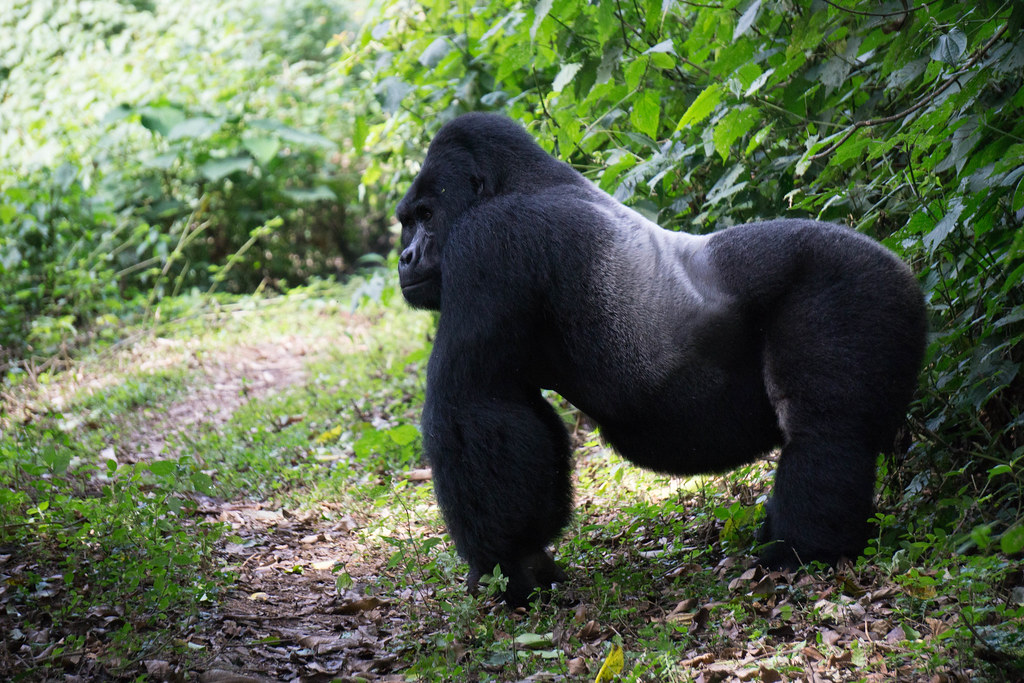
Volcanoes National Park is one of Africa’s best-known mountain gorilla trekking destinations. Located in northwestern Rwanda, the park protects forested volcanic slopes within the Virunga conservation landscape.
Visitors begin with a briefing from park staff before entering the forest with trained guides and trackers. The length and difficulty of the trek depend on the location of the gorilla family and the terrain.
Observing mountain gorillas in their natural habitat is an extraordinary experience. Because trekking permits are limited, book in advance and verify current prices, availability, age requirements and park regulations.
Learn more through our Rwanda gorilla trekking safari guide.
Explore Kigali and Lake Kivu
Kigali offers opportunities to discover Rwanda’s history, markets, restaurants and contemporary culture. It is also a practical starting point for travelling into the countryside.
Lake Kivu provides a relaxing contrast to the trekking experience, with scenic shorelines, lakeside towns and boat excursions. Depending on your schedule, you can visit Rubavu or Karongi before continuing to Uganda.
2. Uganda: Gorillas, Chimpanzees and Rainforest Adventures
Uganda is an excellent destination for travellers who want to combine primate encounters with traditional wildlife safaris.
Bwindi Impenetrable National Park
Bwindi is internationally recognised for its mountain gorilla population and remarkable rainforest biodiversity. Gorilla trekking takes visitors through forest terrain with trained guides and trackers.
The experience can be physically demanding, so suitable hiking footwear, rain protection and preparation are important.
If you have already trekked gorillas in Rwanda, you could use your time in Uganda to explore other wildlife destinations. Alternatively, trekking in both countries can be rewarding for travellers with enough time and budget.
Explore our Uganda gorilla trekking safari guide for more information.
Kibale National Park: Chimpanzee Tracking
Kibale National Park is a leading destination for chimpanzee tracking. Guided walks provide opportunities to observe chimpanzees and learn about their behaviour and forest habitat.
Combining chimpanzee tracking in Uganda with mountain gorilla trekking in Rwanda or Uganda creates an especially rewarding primate-focused holiday.
Queen Elizabeth National Park
Queen Elizabeth National Park introduces a different landscape, with savannah plains, wetlands, crater lakes and woodland habitats.
Game drives provide opportunities to search for elephants, buffaloes, antelopes and predators. A boat excursion along the Kazinga Channel offers a chance to see hippos and abundant birdlife.
Travellers with extra time can also visit Murchison Falls National Park, where the Nile forces its way through a narrow gorge before plunging downstream.
3. Kenya: The Maasai Mara and the Great Migration
Kenya offers some of East Africa’s most recognisable safari landscapes, combining open grasslands, rich wildlife populations and spectacular mountain scenery.
Maasai Mara National Reserve
The Maasai Mara is one of Africa’s most celebrated wildlife destinations. Its grasslands support lions, cheetahs, elephants, giraffes, buffaloes and numerous other species.
The reserve forms part of the wider Serengeti–Mara ecosystem and is an important seasonal destination for the Great Migration. Large herds of wildebeest and zebras move through the ecosystem in response to seasonal conditions.
The exact timing and location of the herds vary. Travellers hoping to witness the migration should plan around current seasonal information rather than relying on fixed dates or guaranteed river crossings.
Discover more in our Kenya wildlife safari guide.
Amboseli National Park
Amboseli is famous for its elephant herds and views towards Mount Kilimanjaro when weather conditions are clear. The park’s open landscapes make it a favourite for wildlife photography.
Its location in southern Kenya also makes it an interesting option for travellers planning a longer regional road trip.
Lake Nakuru and the Great Rift Valley
Lake Nakuru National Park offers lake scenery, birdlife, rhinos and other wildlife. The surrounding Great Rift Valley adds scenic viewpoints and opportunities to explore Kenya beyond its famous savannah reserves.
For a shorter itinerary, choose the Maasai Mara and one additional park rather than trying to visit too many destinations in a limited period.
4. Tanzania: Serengeti, Ngorongoro and Zanzibar
Tanzania brings together vast wilderness areas, exceptional wildlife viewing and beautiful coastal destinations.
Serengeti National Park
The Serengeti is one of Africa’s most famous wildlife destinations, known for its large predator populations and the annual Great Migration.
Different regions of the park offer different seasonal opportunities. The central Serengeti is well known for wildlife viewing throughout the year, while other areas become particularly important during different phases of the migration.
Choose your accommodation according to the season, travel route and wildlife-viewing priorities.
Our Tanzania safari guide provides a useful starting point for planning your safari.
Ngorongoro Crater
The Ngorongoro Conservation Area features dramatic highland scenery and a remarkable variety of wildlife habitats. A visit to Ngorongoro Crater provides opportunities to see a range of animals within a spectacular volcanic landscape.
Confirm current fees, access arrangements and park regulations before your visit.
Tarangire National Park
Tarangire is renowned for elephants, baobab trees and seasonal concentrations of wildlife. It complements the Serengeti and Ngorongoro by offering a different landscape and safari experience.
Zanzibar: Finish Your Journey on the Indian Ocean
After several weeks of wildlife viewing and road travel, Zanzibar offers a relaxing beach extension. Enjoy the Indian Ocean, discover Swahili culture, explore historic Stone Town or unwind at a beach resort.
Plan your extension with our Zanzibar beach holiday guide.
Suggested 30-Day Rwanda, Uganda, Kenya and Tanzania Itinerary
A month provides a useful framework for exploring all four countries. The route below is a sample itinerary and should be adjusted according to transport schedules, border requirements, permit availability and your interests.
Days 1–4: Rwanda
Arrive in Kigali and explore the city. Continue to Volcanoes National Park for mountain gorilla trekking, then visit Lake Kivu or enjoy a cultural experience if time permits.
Days 5–10: Uganda
Travel towards southwestern Uganda. Prioritise Bwindi for gorilla trekking, Kibale for chimpanzee tracking or Queen Elizabeth National Park for wildlife viewing.
Including all three destinations requires careful planning and sufficient time for road transfers.
Days 11–13: Travel to Kenya
Travel to Nairobi using a suitable flight or carefully organised overland connection. Allow time for border formalities and transfers before continuing to the safari areas.
Days 14–18: Maasai Mara
Spend several nights in the Maasai Mara enjoying morning and afternoon game drives. If your dates coincide with the migration, seek current advice about the most promising wildlife-viewing areas.
Days 19–21: Amboseli or Lake Nakuru
Choose Amboseli for elephants and Kilimanjaro scenery, or Lake Nakuru for rhinos, birdlife and Rift Valley landscapes.
Days 22–26: Serengeti National Park
Continue into Tanzania using a suitable transport arrangement. Spend several days exploring the Serengeti, choosing your accommodation based on seasonal wildlife movements.
Days 27–28: Ngorongoro and Tarangire
Visit Ngorongoro Crater and, if the route and time allow, continue to Tarangire National Park.
Days 29–30: Arusha or Zanzibar
Finish your mainland safari in Arusha or travel to Zanzibar for a short beach extension. Add extra days if you want a more relaxed island stay.
Important planning advice: Four countries in 30 days is an ambitious journey. A longer trip may be preferable for travellers who want extensive overland driving, several gorilla experiences or multiple additional national parks. Regional flights and local safari arrangements can help reduce lengthy transfers.
Self-Drive Safari Across Rwanda, Uganda, Kenya and Tanzania
A self-drive safari gives independent travellers flexibility to explore scenic roads, towns and selected national parks. However, crossing four countries in a rental vehicle requires careful preparation.
Not every rental company allows its vehicles to cross all four borders. Written authorisation, additional insurance, vehicle documentation and cross-border fees may apply. Some itineraries are more practical with separate rental vehicles or regional flights.
Before booking, confirm:
- Whether the rental agreement permits travel in all four countries.
- Which border crossings are allowed and what documents are required.
- Whether insurance and roadside assistance remain valid across borders.
- Whether the vehicle is suitable for the chosen roads and parks.
- Whether camping equipment and recovery gear are included, if needed.
- Whether your planned activities comply with each park’s rules.
A 4×4 can be useful for remote safari roads and camping itineraries, but the right vehicle depends on your route, travel season, group size and luggage.
Explore our 4×4 car rental for East Africa page to compare suitable vehicle options.
How Much Does a Four-Country East Africa Safari Cost?
The total cost depends on your travel style, accommodation category, transport arrangements, season and selected activities.
Gorilla trekking permits, park fees, safari accommodation and transport between countries can represent a substantial portion of the budget.
| Expense | What to consider |
|---|---|
| Accommodation | Campsites, guesthouses, lodges or luxury camps |
| Transport | Rental vehicle, fuel, regional flights and transfers |
| Gorilla trekking | Applicable permit fees and availability |
| Chimpanzee tracking | Activity permits and guide arrangements |
| National parks | Entry fees, vehicle charges and activities |
| Food | Meals, drinks and personal expenses |
| Border arrangements | Visas, vehicle authorisation and insurance |
| Optional activities | Boat trips, cultural visits and beach extensions |
Request an itemised quotation for your dates and group size. Check which services are included, which costs are excluded and whether the price covers cross-border travel.
Best Time to Visit East Africa
The ideal travel period depends on your priorities.
For gorilla trekking: Drier periods are often popular because forest trails can be easier to navigate, although rain can occur throughout the year.
For the Great Migration: Choose the Maasai Mara or the relevant Serengeti region according to the expected location of the herds during your travel dates.
For self-drive travel: Check road conditions, especially when visiting remote parks or using unpaved roads.
For a four-country itinerary: Reserve important activities first and allow flexibility for long transfers, weather and changing transport schedules.
Responsible Tourism and Conservation
Responsible tourism helps protect wildlife habitats and supports communities throughout East Africa.
Follow park rules, maintain respectful distances from wildlife, avoid littering and use authorised guides where required. Gorilla trekking is regulated to protect endangered primates, and visitors must follow ranger instructions and applicable wildlife-interaction guidelines.
Choose locally operated services where possible, respect community customs and support experiences that provide meaningful benefits to local people.
Frequently Asked Questions
Can I visit Rwanda, Uganda, Kenya and Tanzania in one trip?
Yes. All four countries can be combined in an extended holiday using road transfers, regional flights or a mixture of both. The route should account for permits, travel times and border requirements.
Is 30 days enough for all four countries?
Thirty days provides a useful introduction, but the itinerary can be busy. Consider extending your trip if you want multiple gorilla treks, more national parks or a longer Zanzibar stay.
Can I trek gorillas in both Rwanda and Uganda?
Yes, subject to permit availability and park regulations. Visiting both countries adds cost and travel time, so some travellers choose one gorilla destination and spend the extra time exploring other attractions.
Can I use one rental vehicle in all four countries?
Only if the rental company explicitly permits cross-border travel and the required documents and insurance are arranged. Confirm the policy in writing before booking.
Where can I see the Great Migration?
The migration moves through the wider Serengeti–Mara ecosystem in Tanzania and Kenya. The best viewing location depends on the season and movement of the herds. Specific sightings and river crossings cannot be guaranteed.
Can I include Zanzibar?
Yes. Zanzibar can be added after the mainland Tanzania safari, usually using a suitable flight or other available connection. Allow additional days for the island stay.
Book Your Ultimate East Africa Safari
Rwanda, Uganda, Kenya and Tanzania offer a remarkable combination of mountain gorillas, chimpanzees, savannah wildlife, volcanic landscapes, cultural encounters and Indian Ocean beaches.
Whether you prefer a guided safari, an independent road trip or a combination of both, the best itinerary is one that matches your interests, travel dates and budget.
Start planning with Self Drive Dar es Salaam. Contact the team to discuss your preferred destinations, vehicle requirements, accommodation and cross-border travel arrangements.
Discover four extraordinary countries and create an East African adventure tailored to your travel dreams.