
Serengeti National Park, Tanzania: Complete Guide to Wildlife, the Great Migration, Safari Activities and Self-Drive Safaris
Introduction to Serengeti National Park, Tanzania
Serengeti National Park is one of Africa’s most famous wildlife destinations and a highlight of any Tanzania safari. Located in northern Tanzania, this extraordinary wilderness is celebrated for its vast open plains, abundant wildlife, dramatic predator encounters and the spectacular Great Wildebeest Migration. Its name comes from the Maasai word Siringet, commonly interpreted as meaning “the place where the land runs on forever,” a fitting description of its expansive grasslands and endless horizons.
Covering approximately 14,750 square kilometres, Serengeti National Park protects one of the most important wildlife ecosystems on the African continent. Its landscapes range from open savannah and rocky kopjes to river valleys, woodlands and seasonal wetlands. These habitats support large populations of wildebeest, zebras, gazelles, elephants, giraffes, buffaloes, lions, leopards, cheetahs and many other species.
The Serengeti is particularly famous for the annual migration of millions of wildebeest and hundreds of thousands of zebras and gazelles as they move in search of fresh grazing and water. This movement is one of the world’s most remarkable wildlife spectacles, attracting visitors, photographers and wildlife enthusiasts from across the globe.
Beyond the migration, Serengeti offers excellent opportunities for traditional game drives, birdwatching, photography and cultural experiences in the surrounding region. Visitors can explore the central Seronera area, the northern plains, the western corridor and the southern grasslands, each offering different scenery and wildlife-viewing opportunities.
Whether you prefer a luxury lodge, a tented safari camp, a guided wildlife adventure or an independent Tanzania self-drive safari, Serengeti provides a remarkable setting for discovering Africa’s natural heritage.
This guide explains the park’s location, history, climate, wildlife, activities, transport options, accommodation, costs to consider and the best time to visit. It also explains how to plan a Serengeti self-drive safari using a suitable 4×4 vehicle.
Location of Serengeti National Park
Serengeti National Park is situated in northern Tanzania, mainly within the Mara and Simiyu regions, forming part of the wider Serengeti ecosystem. It lies west and northwest of the Ngorongoro Conservation Area and extends towards the Kenyan border, where the ecosystem continues into Maasai Mara National Reserve.
The park is approximately 325 kilometres by road from Arusha to the central Serengeti area, although actual driving distances and times depend on your destination, route, road conditions and stops along the way. Reaching the park can take much of a day, so travellers should plan their journey carefully.
Several main access routes serve different parts of Serengeti. The Naabi Hill Gate is a common entrance for visitors travelling from the Ngorongoro area into the southern and central park. Other access points serve the western and northern sections. The most suitable gate depends on your accommodation and intended wildlife-viewing area.
Serengeti’s location makes it an important part of Tanzania’s Northern Safari Circuit. It is frequently combined with:
- Ngorongoro Conservation Area, famous for its crater and dense wildlife populations.
- Tarangire National Park, known for elephants and baobab trees.
- Lake Manyara National Park, recognised for its diverse habitats and birdlife.
- Arusha National Park, offering forest, mountain and crater landscapes.
Travellers can explore these destinations on a guided tour or arrange a Tanzania 4×4 car rental for a more flexible road trip.
History of Serengeti National Park
Serengeti has a long history of human habitation, wildlife conservation and pastoral traditions. Indigenous communities, including the Maasai, have lived in the wider region for generations, developing livelihoods and cultural practices closely connected with the surrounding landscape.
The area became increasingly recognised for its wildlife during the early twentieth century. Serengeti National Park was formally established in 1951, creating a protected area for its extraordinary wildlife and habitats.
The park later became internationally renowned through wildlife research, conservation initiatives and documentaries that introduced audiences around the world to its lions, cheetahs, wildebeest and vast savannah landscapes.
Researchers have studied the Serengeti ecosystem for decades, contributing significantly to scientific understanding of predator-prey relationships, migration patterns, animal behaviour and ecosystem dynamics.
Conservation in Serengeti also involves addressing challenges such as poaching, habitat pressures, human-wildlife interactions and the need to maintain ecological connectivity across the wider ecosystem.
Today, Serengeti National Park is a UNESCO World Heritage Site and a central part of Tanzania’s wildlife conservation and tourism heritage. Its protection helps preserve one of the world’s most important natural systems for future generations.
Climate and Weather in Serengeti National Park
Serengeti experiences a tropical savannah climate, with temperatures and rainfall varying according to elevation, season and location within the park. Days can be warm, while mornings and evenings may be surprisingly cool, particularly during game drives in open vehicles.
The park’s seasonal rainfall influences grass growth, water availability and the movement of grazing animals. This is why wildlife-viewing conditions and migration locations change throughout the year.
June to October: The Main Dry Season
The middle of the year through October is generally a drier period across much of Serengeti. Vegetation may become thinner, and animals can be easier to observe around rivers, waterholes and remaining grazing areas.
This period is popular for wildlife viewing and can offer opportunities to witness dramatic river crossings in the northern Serengeti when migrating herds are in the area.
However, river crossings are unpredictable. The presence of wildebeest near a river does not guarantee that a crossing will occur during a particular visit.
November to December: Short Rains
The short rains often begin around November, although timing varies between years and locations.
Fresh grass begins to emerge in some areas, and the scenery becomes greener. The migration may move towards the southern plains as the herds follow changing grazing conditions.
This can be an excellent period for photography, with green landscapes, dramatic skies and active wildlife.
January to March: Calving Season
The southern Serengeti and neighbouring Ndutu area often become important during the calving season, when large numbers of wildebeest give birth.
The exact timing and location vary with rainfall and grass availability. Calving commonly peaks around February, but wildlife movements are not fixed to a calendar.
This period offers opportunities to observe young animals and predator activity, including lions, cheetahs and hyenas hunting across the open plains.
April to May: Long Rains
The long rains usually occur around April and May. Grasslands become lush, and the park’s landscapes can be especially beautiful.
Rain may make some roads muddy or difficult to navigate, particularly in remote areas. A suitable 4×4, careful route planning and up-to-date local advice are important for self-drive visitors.
The wetter season can also provide rewarding photography, fewer visitors in some areas and excellent birdwatching opportunities.
What Should You Pack?
For a Serengeti safari, bring lightweight clothing, a warm layer for early mornings, comfortable shoes, sunscreen, sunglasses, a hat and a waterproof jacket. Binoculars and a camera are useful for wildlife viewing.
If you are planning a self-drive safari, check road conditions, fuel availability, park rules and your vehicle’s equipment before travelling into remote areas.
Geography and Landscapes of Serengeti National Park
Serengeti is famous for its expansive grasslands, but its geography is much more varied than the image of an endless plain suggests.
The park contains open short-grass plains, long-grass savannah, rocky kopjes, acacia woodlands, riverine forests, seasonal streams and permanent rivers. These different habitats support different wildlife species and create varied safari experiences.
The Southern Plains
The southern plains are known for their broad grasslands and seasonal importance to the wildebeest migration. During periods when fresh grazing is available, large herds may gather across these open landscapes.
The relatively open terrain can provide excellent visibility for observing wildebeest, zebras, gazelles and predators.
The Central Serengeti
The central Serengeti, particularly the Seronera area, is a major wildlife-viewing region. Its mix of plains, rocky outcrops and riverine vegetation supports resident wildlife throughout much of the year.
This area is often a practical choice for first-time visitors because it offers a variety of habitats and is well positioned for exploring different parts of the park.
The Western Corridor
The western Serengeti contains river systems, woodlands and grasslands. The Grumeti River is particularly associated with the migration during parts of the year, although the timing and location of the herds vary.
Riverine habitats attract animals seeking water and shade, making this region interesting for both wildlife viewing and photography.
The Northern Serengeti
The northern Serengeti features rolling hills, open grasslands and river valleys. The Mara River is one of the region’s best-known landmarks because migrating wildebeest may cross it during their seasonal movement.
The northern region is also home to resident wildlife, so a visit can be rewarding even when the migration is elsewhere.
Kopjes and Rocky Outcrops
Serengeti’s granite kopjes rise above the plains, creating distinctive landmarks and important wildlife habitats.
Lions may rest on the rocks or use the surrounding vegetation for shade, while smaller animals shelter among crevices. These outcrops also provide useful viewpoints for observing the surrounding grasslands.
The diversity of landscapes is one reason Serengeti supports such an impressive range of wildlife.
Wildlife in Serengeti National Park
Serengeti is one of Africa’s premier wildlife-viewing destinations. Its varied habitats support large herbivore populations and a rich community of predators and scavengers.
Wildlife sightings depend on the season, weather, location and animal movements, but visitors have excellent opportunities to experience the park’s remarkable biodiversity.
The Big Five in Serengeti
Serengeti is home to all five members of Africa’s traditional Big Five: lions, leopards, elephants, buffaloes and rhinoceroses.
Lions: Serengeti is famous for its lions. They may be seen resting on kopjes, lying in the shade, moving through grassland or hunting near concentrations of grazing animals.
Leopards: These elusive cats are often associated with riverine trees and wooded areas. They can sometimes be seen resting in branches or moving quietly through vegetation.
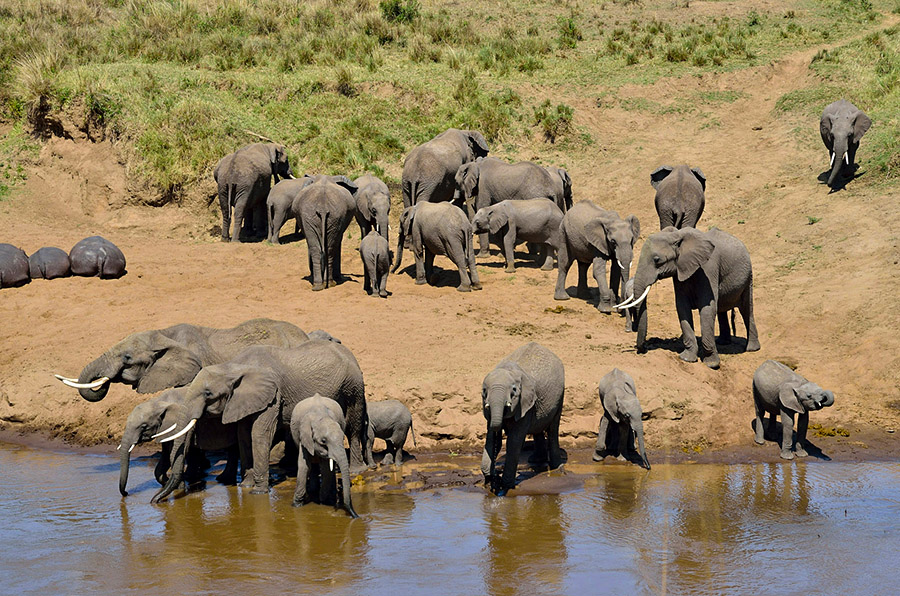
Elephants: Elephants inhabit parts of the park and are often encountered near woodland, water sources and feeding areas.
Buffaloes: African buffaloes graze in herds and may be found in grasslands and woodland edges. They are powerful animals and should always be observed from a safe distance.
Rhinoceroses: Black rhinos occur in the Serengeti ecosystem, but they are rare and difficult to spot. Sightings are never guaranteed, and visitors should follow all wildlife-viewing rules.
Although Serengeti is an excellent place to search for the Big Five, a safari should not be judged only by whether all five are seen. The park’s wider wildlife diversity and extraordinary landscapes are equally important parts of the experience.
Wildebeest and the Great Migration
The Great Wildebeest Migration is Serengeti’s most famous wildlife spectacle. Each year, enormous herds of wildebeest, accompanied by zebras and gazelles, move through the wider Serengeti ecosystem in response to rainfall and the availability of fresh grass.
The migration is not a single event that happens in one place on fixed dates. It is a continuous movement influenced by weather, grazing conditions and water availability.
The herds commonly use the southern plains for calving early in the year, move through the western and central regions as the seasons change, and may reach the northern Serengeti and Mara River area during the middle or later part of the year. Their movements can vary considerably.
Visitors hoping to see the migration should choose their accommodation and route according to the likely seasonal location of the herds, while allowing flexibility for natural variation.
Lions, Cheetahs and Leopards
Serengeti is particularly rewarding for travellers interested in African predators.
Lions often hunt in groups and may be seen resting together, caring for cubs or searching for prey. Cheetahs favour open landscapes where their speed gives them an advantage when hunting, while leopards are more secretive and often use trees or dense vegetation for shelter.
The abundance of herbivores supports a healthy predator community, although sightings depend on where animals are located at any given time.
Patient observation, experienced guiding and early morning or late afternoon game drives can improve opportunities to see predators behaving naturally.
Hyenas and Other Carnivores
Spotted hyenas are common and important members of the Serengeti ecosystem. They are skilled hunters and scavengers and play a significant role in maintaining ecological balance.
Jackals and other smaller carnivores may also be encountered. Their behaviour, calls and interactions with other animals provide additional interest for wildlife enthusiasts.
Night-time activity is generally more difficult to observe in a standard self-drive safari, so visitors should follow park regulations and only take part in authorised activities.
Giraffes, Zebras and Antelopes
Serengeti supports large numbers of grazing and browsing animals, including giraffes, zebras, Thomson’s gazelles, Grant’s gazelles, topis, hartebeests and other antelope species.
These animals are an essential part of the ecosystem, sustaining predators and helping shape the grasslands through grazing and browsing.
Large herds of zebras and wildebeest can create unforgettable scenes, particularly when they move across the open plains or gather near water sources.
Birdwatching in Serengeti National Park
Serengeti is also an excellent birdwatching destination, supporting a wide variety of resident and migratory species.
Birds of prey, ostriches, secretarybirds, vultures, storks, eagles, rollers, bee-eaters and numerous smaller birds can be found across its varied habitats. Seasonal wetlands and riverine vegetation may attract additional species.
Birdwatchers should carry binoculars and consider allowing extra time for observation. Even during a game drive focused on mammals, the birdlife adds colour and diversity to the safari experience.
Best Things to Do in Serengeti National Park
Serengeti offers a wide range of safari activities, from classic game drives to specialist photography and seasonal migration viewing.
1. Enjoy Morning and Afternoon Game Drives
Game drives are the main activity in Serengeti and the best way to explore its vast landscapes.
Early morning is often a productive time for wildlife viewing because temperatures are cooler and many animals are active. Afternoon drives provide further opportunities to observe wildlife as animals emerge from shaded areas or move towards water sources.
During a game drive, you may see elephants, giraffes, zebras, antelopes, buffaloes and predators. The exact experience depends on the region you explore and the time of year.
Self-drive visitors should stay on permitted roads, respect speed limits and avoid disturbing animals or blocking their movement.
2. Experience the Great Migration
For many travellers, witnessing the Great Migration is the main reason to visit Serengeti.
The sight of thousands of wildebeest and zebras moving across the plains is extraordinary, and the movement of the herds attracts predators and scavengers.
Migration experiences vary by season. Calving may be a highlight in the southern plains early in the year, while the western corridor and northern Serengeti may become important at other times.
If you want to see a particular stage of the migration, plan your itinerary around the likely location of the herds rather than relying only on a general month-by-month description.
3. Search for Lions and Other Predators
Serengeti’s predator populations make it an exciting destination for wildlife enthusiasts.
Game drives may reveal lions resting on kopjes, cheetahs scanning the plains or leopards concealed among riverine trees. Hyenas and other carnivores can also provide fascinating encounters.
Always observe predators responsibly. Never approach them on foot, leave your vehicle in unauthorised locations or pressure your driver to move too close.
4. Visit the Seronera Valley
The Seronera area is one of Serengeti’s most popular wildlife-viewing regions. Its riverine habitats, open plains and rocky outcrops attract a wide variety of animals.
Because resident wildlife remains in the area throughout the year, Seronera can be a useful base for visitors travelling outside the main migration periods.
It is also a practical location for combining several game drives without moving accommodation every night.
5. Explore the Northern Serengeti and Mara River Area
The northern Serengeti offers scenic landscapes and opportunities to see the migration when the herds are in the region.
The Mara River is particularly famous for wildebeest crossings. These events can be dramatic, but their timing is unpredictable, and not every herd crosses while visitors are watching.
Travellers should allow enough time in the north and avoid treating a river crossing as a guaranteed scheduled event.
6. Enjoy Wildlife Photography
Serengeti is one of Africa’s leading destinations for wildlife photography.
The park’s open plains, dramatic skies, golden light, large herds and predator encounters provide outstanding photographic opportunities. Kopjes and riverine forests create contrasting backgrounds for wildlife portraits and landscape images.
Early morning and late afternoon often provide softer light. A camera with a telephoto lens is useful for distant animals, while binoculars help locate wildlife before taking photographs.
Respect park rules and maintain a safe distance from animals. Never obstruct other vehicles or disturb wildlife to obtain a better photograph.
7. Go Birdwatching
Birdwatching can be included in almost any Serengeti itinerary.
The park’s open plains, rivers, woodlands and seasonal wetlands support many bird species. Raptors may circle above the grasslands, while ostriches and secretarybirds can be seen walking across open areas.
Allow time to stop and observe birds rather than concentrating exclusively on large mammals.
8. Experience a Hot-Air Balloon Safari
Hot-air balloon safaris are available in certain parts of the Serengeti ecosystem through authorised operators, subject to location, season and availability.
The experience typically involves an early-morning flight over the plains, offering aerial views of wildlife and landscapes. Some packages include a celebratory breakfast after landing.
Balloon safaris are usually an additional expense and must be arranged in advance. Confirm the departure location, transfer arrangements, baggage requirements and what the package includes.
9. Visit a Maasai Cultural Experience
Maasai communities live in the wider region surrounding Serengeti and the Ngorongoro Conservation Area. An organised cultural visit can provide insight into traditional pastoral livelihoods, local history, beadwork, music and other aspects of community life.
Choose respectful, community-led experiences and confirm whether visits are included in your itinerary or require separate payment.
Visitors should ask permission before taking photographs of people and follow local guidance throughout the visit.
10. Enjoy a Multi-Day Safari Adventure
Serengeti is extensive, and a multi-day stay allows you to explore more than one region.
A three- to five-day visit can provide time for the central Serengeti and another region, while longer trips offer greater flexibility to follow seasonal wildlife movements.
For a more varied journey, combine Serengeti with Ngorongoro Crater, Tarangire National Park and Lake Manyara National Park.
How to Get to Serengeti National Park
Travellers can reach Serengeti by road or air, depending on their budget, schedule and preferred safari style.
Driving from Arusha to Serengeti
Arusha is the main starting point for many northern Tanzania safaris. The road journey to the central Serengeti is approximately 325 kilometres, although the route, gate and final destination can change the distance substantially.
The drive commonly passes through the Ngorongoro region before continuing towards the Serengeti entrance. Travel time varies with road conditions, stops, park formalities and the exact location of your accommodation.
Although the distance may appear manageable on a map, the journey can take much of the day. Travellers should avoid scheduling too many activities on arrival day.
If you are travelling independently, confirm the correct entrance gate, accommodation coordinates, fuel options and current road conditions before leaving Arusha.
Self-Drive Safari to Serengeti National Park
A self-drive safari is an appealing way to explore Serengeti if you want flexibility over your route, departure times, accommodation and wildlife-viewing schedule.
However, Serengeti is a large and sometimes remote wilderness area. Choosing the right vehicle and planning fuel, accommodation, park entry and emergency arrangements are essential.
A suitable 4×4 is generally recommended for a self-drive safari, especially if your route includes rough tracks or travel during the rainy season. The vehicle should be appropriate for the number of passengers, luggage and intended driving conditions.
Before booking a rental, confirm that the vehicle is authorised for national park travel and that your rental agreement explains insurance coverage, breakdown support, spare tyres, recovery equipment and any restrictions on driving in remote areas.
A self-drive trip also requires careful attention to park regulations, opening hours, permitted tracks and rules concerning wildlife viewing. Do not drive off-road unless expressly permitted.
Explore our Tanzania 4×4 car rental options, learn more about self-drive safaris in Tanzania and plan a Serengeti self-drive safari that matches your travel dates and budget.
Flying to Serengeti
Flying can reduce travel time and is convenient for travellers with limited time or those staying at remote safari camps.
Serengeti has several airstrips serving different regions of the park. The most appropriate arrival airstrip depends on your lodge or camp and the wildlife-viewing area you intend to explore.
Flights may operate from Arusha, other safari destinations or regional hubs, depending on the schedule and season.
Confirm luggage limits, departure times, transfer arrangements and whether the flight cost includes transportation between the airstrip and your accommodation.
Guided Safari Tours
A guided safari is a convenient option for visitors who prefer not to drive. Packages may include a professional driver-guide, accommodation, meals, park activities and transport.
Guides can help locate wildlife, interpret animal behaviour and manage the practical details of travelling between safari destinations.
Before booking, compare inclusions carefully. Ask whether park fees, concession fees, transfers, meals and additional activities are included in the quoted price.
Best Time to Visit Serengeti National Park
Serengeti is a year-round safari destination, but the best time to visit depends on your priorities. Some travellers focus on the Great Migration, while others prioritise resident predators, photography, fewer visitors or particular landscapes.
January to March: Wildebeest Calving Season
During the early months of the year, large herds often gather in the southern Serengeti and neighbouring Ndutu area when fresh grass is available.
Calving can attract predators, creating opportunities to observe natural behaviour. The open grasslands may provide excellent visibility, although rainfall and wildlife movements vary.
This is an attractive period for photographers and travellers interested in the early stages of the migration cycle.
April to May: Green Season
The long rains bring greener landscapes, fresh vegetation and dramatic skies. Some areas may be quieter than during peak travel periods.
However, rain can affect road conditions, and some remote routes may become difficult to navigate. Self-drive travellers should check current conditions and allow flexibility in their itinerary.
June to July: Migration Movement and Drying Landscapes
As the seasons change, the herds often move through central and western areas of the ecosystem, although their route depends on rainfall and grazing.
This period can offer excellent game viewing, with opportunities to explore the plains and riverine habitats.
Travellers should choose their accommodation based on current migration information and the regions they most want to visit.
August to October: Northern Serengeti and River Crossings
The northern Serengeti is often a key area for migration viewing during parts of this period. Wildebeest may gather near the Mara River and cross into or out of Kenya’s Maasai Mara ecosystem.
River crossings are unpredictable, and herds may remain on one side for hours or days before moving. Some visits may not include a crossing at all.
The northern Serengeti also supports resident wildlife, so visitors can still enjoy a rewarding safari even if they do not witness this particular event.
November to December: Return Towards the Southern Plains
The short rains often encourage the herds to move towards areas where fresh grass is available, including the southern plains.
This period can offer green scenery and rewarding wildlife photography. The exact route depends on the timing and distribution of rainfall.
What Is the Best Month for Serengeti?
There is no single best month for every traveller. February can be attractive for calving-season wildlife in the south, while the middle and later parts of the year may offer migration-viewing opportunities in western or northern areas.
For resident wildlife and general game drives, the central Serengeti can be rewarding throughout much of the year.
The best approach is to select your dates first, then plan your route and accommodation around the most likely wildlife-viewing opportunities.
Accommodation in and Around Serengeti National Park
Serengeti offers accommodation ranging from luxury lodges and permanent tented camps to seasonal migration camps and public campsites.
Your choice should depend on your budget, desired comfort level, preferred wildlife-viewing region and whether you are travelling on a guided safari or self-drive trip.
Luxury Safari Lodges
Luxury lodges offer comfortable rooms or suites, dining facilities and organised safari activities. Many are positioned to provide access to specific wildlife-viewing areas.
These properties can be suitable for travellers seeking a premium safari experience, couples celebrating a special occasion or visitors who prefer not to manage day-to-day logistics.
Rates may include meals and selected activities, but park fees, transfers, drinks and specialist experiences may be charged separately.
Tented Safari Camps
Tented camps offer a classic safari atmosphere while providing varying levels of comfort, from simple furnished tents to high-end accommodation with private bathrooms and dining facilities.
Some camps are permanent, while others operate seasonally to follow wildlife movements.
If the Great Migration is your priority, choose a camp based on its location during your travel dates rather than its general Serengeti branding.
Public Campsites
Public campsites may suit budget-conscious travellers and those exploring Serengeti with a suitable rental vehicle and camping equipment.
Facilities and levels of comfort differ from those of lodges and private camps. Confirm campsite availability, current rules, reservations and the equipment you must bring before travelling.
Camping in a national park requires careful attention to wildlife safety. Use only authorised campsites and follow all instructions from park staff.
Where Should You Stay in Serengeti?
The most suitable area depends on your itinerary:
- Central Serengeti: A practical base for general wildlife viewing and exploring different habitats.
- Southern Serengeti: Useful during periods when herds gather on the southern plains, especially around calving season.
- Western Serengeti: Worth considering when the migration and your route bring you towards the western corridor.
- Northern Serengeti: A strong option when you want to explore the northern landscapes and the Mara River region during the appropriate season.
Accommodation availability and rates vary. Book early if you are travelling during popular migration periods or have specific camps in mind.
Serengeti National Park Entrance Fees and Safari Costs
The cost of visiting Serengeti depends on several factors, including your nationality or residency category, travel season, accommodation standard, number of days, vehicle arrangements and whether you book a guided package or self-drive.
Park charges can change, so visitors should confirm the latest official tariffs with Tanzania National Parks (TANAPA) or their authorised tour operator before travelling.
When preparing your budget, consider the following expenses:
- Park entrance fees for each visitor and day, where applicable.
- Vehicle or conservation-related charges that apply to your itinerary.
- Accommodation and meals.
- Vehicle rental and fuel.
- Professional guide or driver fees, if required by your package.
- Camping equipment and campsite charges, where applicable.
- Transfers or domestic flights.
- Optional activities such as hot-air balloon safaris.
- Additional cultural visits and personal expenses.
A self-drive safari may offer flexibility, but it does not automatically make the trip inexpensive. Vehicle rental, park charges, fuel and accommodation can represent a significant share of the budget.
To compare options fairly, ask for an itemised quotation and confirm exactly which costs are included. This is particularly important when comparing budget camping, mid-range tented camps and luxury lodge safaris.
Suggested Serengeti National Park Safari Itinerary
A three-day visit can provide a useful introduction to Serengeti, while four to six days allow more time to explore different regions. The ideal itinerary depends on your arrival point and seasonal wildlife movements.
Day 1: Arusha to Serengeti National Park
Depart Arusha early and travel towards Serengeti via the Ngorongoro region, allowing time for road travel, entrance formalities and stops.
The exact route and arrival time depend on your accommodation and chosen gate. If time permits and the park’s operating rules allow, enjoy a game drive on arrival.
Look for zebras, wildebeest, gazelles, giraffes and other wildlife as you enter the Serengeti ecosystem.
Check in at your lodge, tented camp or authorised campsite and prepare for an early start the following morning.
Overnight in the Serengeti area.
Day 2: Full-Day Game Drive in Serengeti
Start early for a game drive in the region around your accommodation.
Depending on the season and local conditions, explore open plains, rocky kopjes, riverine habitats or areas where wildlife has recently been reported.
Look for lions, elephants, buffaloes, giraffes, zebras, antelopes and other species. If you are travelling during a migration period, ask your guide or camp team about the most promising areas to explore.
Enjoy lunch at an authorised picnic site or return to your accommodation, depending on your itinerary and park rules.
Continue with an afternoon game drive before returning to camp.
Overnight in Serengeti.
Day 3: Morning Game Drive and Departure
Enjoy a final early-morning game drive before breakfast or departure, depending on your schedule.
The morning may provide further opportunities to see predators and other wildlife, particularly in areas where animals were active the previous day.
After your safari, travel towards Ngorongoro, Arusha or another destination. If you are continuing to Ngorongoro Crater, plan the route and overnight arrangements carefully rather than assuming that all activities can be completed on the same day.
This is a sample itinerary. Driving times, park regulations, gate access, accommodation location and seasonal wildlife movements should be checked before finalising your trip.
Practical Travel Tips for Visiting Serengeti National Park
A little preparation can make your Serengeti safari more comfortable and enjoyable.
Book accommodation early: Popular lodges and camps can fill quickly during peak travel and migration-viewing periods.
Choose your region carefully: Serengeti is vast. Plan accommodation around your intended activities and likely seasonal wildlife locations.
Allow enough time: Avoid trying to cover the entire park in one or two rushed days. Longer stays offer more flexibility.
Carry binoculars: Wildlife can be distant, especially across the open plains.
Bring suitable clothing: Pack lightweight daytime clothing and warm layers for early mornings and evenings.
Use sun protection: A hat, sunglasses and sunscreen are important during long game drives.
Check vehicle readiness: Self-drive visitors should confirm spare tyres, a jack, basic tools, recovery equipment and breakdown assistance.
Plan fuel carefully: Identify fuel availability along your route and avoid entering remote areas without sufficient fuel for the planned journey.
Follow park rules: Stay on permitted tracks, observe speed limits and never approach wildlife on foot.
Keep a safe distance: Do not crowd animals or obstruct their movement, particularly near predators and river crossings.
Respect local communities: Ask permission before photographing people and choose responsible cultural experiences.
Check official fees: Confirm current park charges and vehicle requirements before travelling.
Be patient: Wildlife sightings are unpredictable. Allow time to observe animals without rushing from one location to another.
Combine Serengeti with Other Tanzania Safari Destinations
Serengeti is the centrepiece of many northern Tanzania itineraries, but combining it with other destinations creates a richer safari experience.
Ngorongoro Conservation Area
The Ngorongoro Conservation Area is famous for its volcanic crater, dramatic highland scenery and concentrated wildlife populations. A crater game drive is a popular addition to a Serengeti safari.
Explore Ngorongoro Crater safari experiences and plan your route between the crater and Serengeti.
Tarangire National Park
Tarangire is known for elephants, baobab trees and wildlife concentrated around the Tarangire River during drier periods.
It offers a contrasting landscape and is a worthwhile stop on a northern Tanzania circuit.
Discover Tarangire National Park safaris.
Lake Manyara National Park
Lake Manyara offers a mix of woodland, groundwater forest, open areas and lakeshore habitats. Its varied environment supports a wide range of birds and mammals.
Learn more about Lake Manyara National Park.
Arusha National Park
Arusha National Park is a convenient destination near Arusha, with forest, crater landscapes and views of Mount Meru. It is well suited to travellers who want a shorter nature experience before or after a longer safari.
Explore Arusha National Park safari activities.
Maasai Mara National Reserve, Kenya
The Maasai Mara forms part of the wider Serengeti ecosystem across the Kenyan border. During the migration season, wildebeest and zebras may move between the two areas.
Combining Serengeti and Maasai Mara requires careful planning, including international border procedures, travel time, immigration requirements and any cross-border vehicle authorisations.
For a wider adventure, explore East Africa self-drive safaris and build an itinerary that suits your available time, budget and preferred wildlife experiences.
Plan Your Serengeti National Park Safari
Serengeti National Park is one of Africa’s most extraordinary safari destinations, offering expansive landscapes, abundant wildlife and the unforgettable spectacle of the Great Wildebeest Migration.
From lions resting on granite kopjes to cheetahs scanning the plains, elephants moving through woodland and wildebeest gathering in vast herds, every journey offers opportunities to experience the natural world at its most impressive.
The park can be explored through luxury lodges, tented camps, guided safaris and carefully planned self-drive adventures. The right option depends on your travel dates, budget, desired comfort level and the wildlife experiences you most want to enjoy.
For independent travellers, a self-drive safari in Tanzania offers flexibility to choose your own route, spend more time observing wildlife and combine Serengeti with other northern Tanzania destinations. Because the park is extensive and some areas are remote, vehicle selection and route planning are essential.
Start planning your Serengeti adventure today. Explore our Tanzania 4×4 car rental options, discover self-drive safaris in Tanzania, or enquire about a customised Serengeti safari itinerary that includes the wildlife areas best suited to your travel dates.
Contact our team with your travel dates, number of travellers, preferred vehicle and planned route. We can help you organise a memorable Tanzania safari.
Frequently Asked Questions About Serengeti National Park
1. Where is Serengeti National Park located?
Serengeti National Park is in northern Tanzania, near the Kenyan border and west of the Ngorongoro Conservation Area. It forms part of the wider Serengeti ecosystem, which extends into Kenya’s Maasai Mara region.
2. What is Serengeti National Park famous for?
Serengeti is famous for its abundant wildlife, lions and other predators, expansive savannah landscapes and the annual Great Wildebeest Migration.
3. How large is Serengeti National Park?
The park covers approximately 14,750 square kilometres, making it one of Tanzania’s largest and most important protected wildlife areas.
4. Can you see the Big Five in Serengeti?
Yes. Serengeti is home to lions, leopards, elephants, buffaloes and black rhinos. However, rhinos are particularly difficult to spot, and sightings of any wild animal cannot be guaranteed.
5. When is the best time to visit Serengeti National Park?
The best time depends on your interests. January to March can offer calving-season viewing in the south, while parts of the middle and later months of the year may provide opportunities to see the migration in western or northern areas. Resident wildlife can be observed throughout much of the year.
6. When is the Great Wildebeest Migration in Serengeti?
The migration moves through the wider ecosystem throughout the year. The southern plains are often important during calving season early in the year, while the western and northern regions may become important at other times. Exact timing varies with rainfall and grazing conditions.
7. How many days do you need in Serengeti?
Three days is a useful introduction, while four to six days allows more time to explore different regions. If you want to focus on a specific migration location, consider a longer stay to allow for unpredictable wildlife movements.
8. Can I visit Serengeti on a self-drive safari?
Yes. A self-drive safari is possible with a suitable rental vehicle and careful planning. Check the rental agreement, insurance, park regulations, road conditions, fuel options and emergency arrangements before travelling.
9. Do I need a 4×4 for Serengeti National Park?
A suitable 4×4 is generally recommended, particularly for remote routes, rough tracks and wet-season travel. Confirm vehicle suitability and current conditions before your trip.
10. How far is Serengeti from Arusha?
The central Serengeti area is approximately 325 kilometres by road from Arusha, depending on the route and destination. The journey can take much of a day because of road conditions, stops and park entrance formalities.
11. Can I fly directly to Serengeti?
Yes. Flights serve several airstrips within the wider Serengeti area. The appropriate airstrip depends on your accommodation and planned wildlife-viewing region. Transfers from the airstrip should be arranged in advance.
12. Is Serengeti suitable for families?
Yes. Serengeti can be an excellent family safari destination. Families should choose suitable accommodation, check activity and age restrictions, and plan driving times around children’s needs.
13. Can I camp in Serengeti National Park?
Camping is possible at authorised campsites, subject to current rules, availability and applicable charges. Visitors must follow campsite instructions and wildlife safety procedures.
14. How much does a Serengeti safari cost?
The total cost depends on park fees, accommodation, transport, vehicle rental, fuel, meals, guide services, season and optional activities. Obtain an itemised quotation and verify current official fees before booking.
15. Can I combine Serengeti with Ngorongoro Crater?
Yes. Serengeti and Ngorongoro are commonly combined on a northern Tanzania safari. Plan sufficient time for driving, accommodation, park formalities and the crater visit.
16. Are river crossings guaranteed during the Great Migration?
No. River crossings are natural events and cannot be scheduled reliably. Even when herds gather near a river, they may wait before crossing or move elsewhere.
17. What should I pack for a Serengeti safari?
Bring lightweight clothing, a warm layer, comfortable shoes, sun protection, a waterproof jacket, binoculars, a camera and any personal essentials. Self-drive travellers should also check vehicle equipment and emergency supplies.
18. Can I combine Serengeti and Maasai Mara on one trip?
Yes, but crossing between Tanzania and Kenya requires advance planning. Confirm border procedures, immigration requirements, vehicle authorisation, insurance coverage and whether your rental provider permits cross-border travel.
19. Is Serengeti worth visiting outside the migration season?
Yes. Serengeti supports resident wildlife throughout the year, including lions, leopards, elephants, giraffes and many other species. The central Seronera area is often rewarding outside the main migration periods.
20. Can I rent a 4×4 with a rooftop tent for a Serengeti safari?
Some rental providers offer 4×4 vehicles equipped with rooftop tents and camping gear. Confirm that the vehicle is approved for your intended route and that the package includes the equipment you need. Also check authorised camping arrangements, park rules, insurance and breakdown support before booking.